
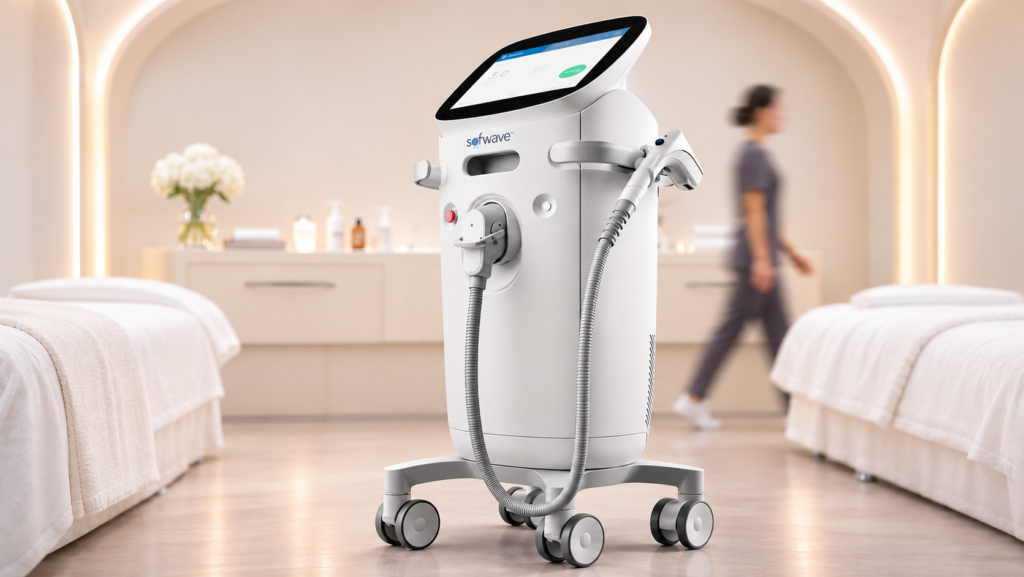
Quick answer: Both treatments send ultrasound energy through the skin, without needles or surgery. Ultherapy has a built-in viewer that lets the provider see the tissue layers. Sofwave’s maker says its system heats the mid-dermal layer, with minimal downtime. Results vary and are not guaranteed. Not sure which suits you? Request a complimentary consultation.
Sofwave and Ultherapy are both ultrasound-based treatments used for skin laxity, but they are different devices, and the right choice depends on your skin, your goals and your provider’s recommendation. If you are comparing the two in Toronto, this guide explains how each one works, where they overlap and what to ask before you decide. Pemberley Springs Spa Eden in North York offers Sofwave, so we say so up front and keep the comparison to what the manufacturers and independent sources state.
Table of Contents
What Do Sofwave and Ultherapy Have in Common?
Both are non-invasive. Neither needs needles, incisions or a long recovery. Both use ultrasound energy delivered through a handheld device, and both are chosen by people who want to address visible lines and signs of laxity without surgery.
Neither is designed to replace a facelift. Both aim for a gradual, subtle improvement, so a practitioner needs to assess your skin, your history and your goals before recommending anything.
How Does Ultherapy Work?
According to the Cleveland Clinic, Ultherapy delivers focused ultrasound into the deeper layers of the skin using a handheld device with a built-in ultrasound viewer. The viewer lets the provider see the tissue layers being targeted and adjust the energy.
It is described for the eyebrows and brow line, the area under the chin and the neck, and for lines and wrinkles on the upper chest. The Cleveland Clinic gives a session length of 30 to 90 minutes in one place and two to three hours in another, depending on how many areas are treated. Full results may take three to six months to be visible.
There is usually no downtime. Discomfort can happen during the ultrasound energy, and bruising, slight redness, swelling or tenderness are possible afterward. Tenderness may last up to a month.
How Does Sofwave Work?
Sofwave is described by its manufacturer as a non-invasive, needle-free ultrasound system. In its announcement of Canadian regulatory clearance, the company says cooled transducers placed on the skin deliver ultrasound energy to the mid-dermal layer, that a treatment takes 30 to 45 minutes, and that downtime and post-treatment discomfort are minimal. The same announcement reports Health Canada clearance in February 2021 and describes the system for facial wrinkles.
At Pemberley Springs, Sofwave is used as an ultrasound-based aesthetic treatment to improve facial lines and wrinkles and selected areas of laxity. Possible reactions include discomfort, tenderness, redness and swelling. Your practitioner explains comfort measures, risks and aftercare before you decide. You can read more in our Sofwave in Toronto guide.
Sofwave vs Ultherapy at a Glance
Sofwave | Ultherapy | |
|---|---|---|
Energy | Ultrasound | Focused ultrasound |
Live imaging | Ask your provider how the treatment area is guided | Built-in viewer shows tissue layers |
Areas described | Facial lines and wrinkles; face and neck options at Pemberley | Brow line, under chin, neck, upper chest lines |
Downtime | Manufacturer describes it as minimal | Usually none; tenderness can last up to a month |
Session length | Manufacturer describes 30 to 45 minutes; confirmed at consultation | About 30 to 90 minutes, up to 2 to 3 hours depending on areas |
Results | Vary, not guaranteed | Full results can take 3 to 6 months |
These descriptions come from the manufacturer and from the Cleveland Clinic. They are not a head-to-head clinical comparison, and a provider who offers a given device is best placed to explain how it is used in practice. If you would like to talk it through, book a complimentary consultation.
Which One Is Right for You?
Four questions help you narrow it down:
- Which areas matter most to you? The brow, jawline, neck or full face may point to different plans.
- How much time do you have? Session length varies by device and treatment area.
- How do you feel about discomfort? Comfort differs from person to person, so ask how it is managed.
- What will your provider actually use? The best treatment is one delivered by a trained practitioner who explains the risks clearly.
At Pemberley Springs, Sofwave comes in three options: Signature Lift (full face), Complete Lift (full face and neck) and Focused Lift (upper or lower half face). Your practitioner confirms the plan and pricing before you decide to proceed.
What Should You Ask Before Booking Either Treatment?
- Who performs the treatment, and what is their training?
- Which areas are suitable for me, and which are not?
- What side effects should I expect, and what is the aftercare?
- How many sessions might I need, and how is progress assessed?
- What is the total price, including tax, before I commit?
Write the answers down so you can compare providers on the same points.
Sofwave Before & After
Explore clinical before-and-after results shared by Sofwave Medical from its partner clinics.
3 months after treatment
3 months after treatment
4 months after treatment
1 month after treatment
2 months after treatment
3 months after treatment
3 months after treatment · Photos courtesy of Willow Facial Aesthetics
1 month after treatment · Photos courtesy of Oliver Spencer, MD
2 months after treatment · Photos courtesy of Eltraself Medspa
3 months after treatment · Photos courtesy of St. Petersburg Center for Plastic Surgery
4 months after treatment · Photos courtesy of Skye Dermatology
3 months after treatment · Photos courtesy of Smile & Skin Aesthetics
Can You Combine Either Treatment With a Facial?
Many people pair a lifting goal with a skin quality goal. At Pemberley Springs, Sofwave can sit alongside JetPeel, a needle-free facial, in a coordinated plan called The Pemberley Continuum. Suitability, order and spacing are decided at consultation, and a combined plan does not necessarily mean both treatments on the same day. Read what a JetPeel facial is to see the other half of that plan.
Frequently Asked Questions
-
Is Sofwave the same as Ultherapy?
No. Both use ultrasound energy, but they are different devices with different approaches, and a provider can explain how each is used.
-
Which is more comfortable, Sofwave or Ultherapy?
Comfort varies from person to person. Discomfort can occur with both, so ask your practitioner how it is managed.
-
Does Pemberley Springs offer Ultherapy?
No. Pemberley Springs offers Sofwave as part of The Lift Collection.
-
How long do results take to show?
There is no single timeline. The Cleveland Clinic says full Ultherapy results may take three to six months to be visible. Your practitioner explains the expected timeline for your goals, and results are not guaranteed.
-
Is there downtime after either treatment?
The Cleveland Clinic says Ultherapy usually has no downtime, and Sofwave's manufacturer describes minimal downtime. Redness, swelling and tenderness are among the possible reactions to both, so ask what to expect for your skin.
